Culver
City
Chronology - Part 1
Sept.
26,
2002
to Nov. 7, 2002
City
of Culver City,
California - Intersection Details
See the
General Notes about Culver City, below.
Washington Boulevard at Beethoven
Posted Speed Limit: 35
Minimum yellow per table: 3.6
Programmed yellow (as of 9-12-02): 3.5
(Yellow subsequently was adjusted - see note below.)
This camera, Culver City's top ticket producer, is
located on a narrow
strip of
Culver City land that extends into the City of LA. It
is only 100' from
the
boundary with LA, on two sides. See map at: Culver City
Documents.)
Editor's estimate[1] of this camera's number of
tickets per
annum: 3800
Estimated cost to public of those tickets: $1,140,000
Estimated revenue (gross) to city from those tickets:
$302,000
City's projection[1] of revenue, all cameras citywide,
Fiscal Year
ended June
30, 2002: $1,500,000
City's projection[1] of expenditure for cameras,
citywide, same FY:
$804,332
City's projected net profit, citywide, same FY: $695,668
Actual rev., exp., same FY (preliminary): Culver City
Documents
City's budget surplus (actual)[1] in last audited fiscal
year:
$7,125,000
Date this camera first listed here: 9-23-02
Westbound Washington / Beethoven tickets are a
discussed at
length Defect
# 2 in the Expanded version of the Home Page.
Until 3-6-03 the warning signs at Washington /
Beethoven were only 36"
tall, less than the 42" minimum. There is more info in
the Chronology
below, at Dec. 3, Jan 14 , Jan. 30, Mar. 6, and Mar.
11.
City
of Culver City - Intersection Details
Sepulveda Boulevard at Green Valley
Posted Speed Limit: 35
Minimum yellow per table: 3.6
Programmed yellow (per Sgt. Wolford at court on
9-26-02): 3.5
(Yellow subsequently was adjusted - see note below.)
This camera, Culver City's next-to-top revenue
producer, is located at
the main
southern entry to Culver City, only 100' from the
boundary with the
City of LA,
and adjacent to a regional shopping mall. See map at:
Culver City
Documents.)
Editor's estimate[1] of this camera's number of
tickets per
annum: approx.
2/3 of that of Washington / Beethoven, above
Date this camera first listed here: 9-26-02
Until March 2003, the warning signs at Sepulveda /
Green Valley were
only
36" tall, less than the 42" minimum. There is more
info in the
Chronology below, beginning at Dec. 3 and continuing
at Jan. 14 and 30.
City of Culver City
- Intersection Details
La Cienega at Washington (a.k.a. Washington / La
Cienega)
Posted Speed Limit: 35
Minimum yellow per table: 3.6
This intersection is an unusual case. The City
actually reduced
the
yellow here.
When the City announced (see Sept. 27, 2002 entry,
below) that they had
changed
the yellow at four intersections, I assumed they had
increased
Washington / La
Cienega's yellow time, just as they had with the three
other
intersections. But
in the months since then, a noticeable upswing in the
number of
Washington / La
Cienega tickets coming to court, plus some of Sgt.
Corrales' trial
testimony
about those tickets, pointed toward the possibility
that they might
have reduced
the timing. In Jan. 2003, the City responded to my
Sept. 2002 public
records
request and provided written confirmation that indeed
it was reduced,
from 4.0
to 3.6. (More information about the signal timing at
Washington / La
Cienega is
at Sept. 27, Jan. 9, Jan. 17 and July 17 in this
chronology.)
The shortening of the yellow at this intersection
raises the serious
question:
How is the City's primary
responsibility, public
safety, served by making this change that
actually increases
the
incidence of red light running at Washington / La
Cienega?
I believe that this camera is the City's #3 revenue
producer
(of seven cameras
presently in operation). It is located at the extreme
northeast tip of
Culver
City, where La Cienega Boulevard passes through Culver
City for 1/4 of
a mile.
The boundary with the City of LA is only 150' north of
this camera. See
the map
at: Culver
City Documents.
Until March 2003, the warning signs at Washington / La
Cienega were
only
36" tall, less than the 42" minimum.
City
of Culver City -
Intersection Details
Sepulveda at Machado
On July 23, 2004 I
noticed
that the required
4th warning sign was not posted on the alley
entering this intersection
from
the west. There's no indication that a sign
was ever posted
there.
The alley could be a private street - it
serves only a large
apartment
complex - but it has its own red signal lamp and
left arrow, so clearly
was
considered to be a bona fide street when the signal
was designed.
No
Sepulveda / Machado defendant has raised the issue
of the missing sign
in
court, yet. The sign requirement (see Defect #
4 on the Home
page) seems
to be absolute, so the missing sign should
invalidate a ticket issued
to a
driver moving in any direction at the intersection,
not just from the
alley.
There is
another defect at Sepulveda / Machado. If you
have a northbound
ticket at this intersection and are interested in
fighting it, please
contact
me for details.
City
of Culver City -
The Chronology
General
Notes
Culver City tickets are
arraigned (defendants
plead guilty or not guilty) on Monday, Wednesday and
Friday mornings
and Friday
afternoons, with the defendants who have pled not
guilty going to trial
on
Thursday afternoons at 1:30. If you are coming out
to the courthouse
anyway (to
ask for an extension, pay your bail, etc.), I
suggest that you plan
your visit
for Thursday afternoon at about 1:45, so you can
watch a few of the
trials and
get a preview of what yours will be like. Or, if you
would like the
opportunity
to compare your ticket to those of other defendants,
plan to arrive by
1:05, at
which time there will be many defendants waiting in
the hallway for the
doors
to open.
Culver
City has eleven cameras. The locations are
depicted on a map, at Culver City
Documents. Culver City is using two
kinds of cameras,
35mm
"still" and digital video, both provided by
RedFlex. For more
description of the two types, see the box entitled
"How to Read Your
Late
Time" in Defect # 7 on the Home page.
Quashing
a
rumor: On
June 12, 2004 an LA Times story about the Costa Mesa
refunds (see Costa
Mesa
section, below) erroneously stated that there had been
2000 refunds in
Culver
City. The city where the big refund (actually
almost 3000
tickets)
happened was not Culver City, it was East LA (see the
East LA section,
above). The Times supplied their story to
AP, so the
incorrect
story will be in hundreds of papers, worldwide, and
will be a
persistent rumor.
You can
read the
transcript of a
typical Culver City red light camera trial, at: Culver City
Documents.
Less
important info below is in lighter
type.
A portion of the Culver City Chronology has been
moved to a separate
page (see
box, below).
Culver
City (cont'd), Sept.
26, 2002:
"Truth In Evidence" Means "Anything Goes"
I came back a week after my trial and attended the
Thursday
trial session
simply to observe. While waiting for the courtroom
doors to open, I
provided
materials to a number of the Washington / Beethoven
defendants there.
Several
of them used those materials in their defense. After
hearing those
defenses,
Commissioner Randall F. Pacheco agreed that the
yellows were too short
and the
signals were illegal, but said that the tickets must
stand because of a
California law (passed by initiative) that says that
evidence in
criminal cases
should not be thrown out because of "an inadvertent
mistake" by the
police. Comm. Pacheco went on to say that the evidence
(the camera
photos)
would not be excluded by our Federal Constitution
protections either,
as the
behavior of the police "doesn't shock the conscience
or seem to be
facially unjust." (Those tests comes from Rochin v.
California, a U.S.
Supreme Court case. See Truth
in
Evidence,
attached. ) (Was the Culver City Police Department's
"mistake" an
"inadvertent" one? See Culver
City
Documents.)
Culver
City (cont'd), Sept.
27, 2002:
Four Cameras Adjusted - Three Up, One Down!
At the council meeting of Sept. 30 the Police
Department announced that
on
Sept. 27 they had adjusted the yellow time on a number
of their red
light
cameras. At Washington / Beethoven, Jefferson / Cota
and Sepulveda /
Green
Valley they increased the yellow to 3.6 seconds from
the previous 3.5.
They also changed the yellow at Washington / La
Cienega,
but initially
it was unclear whether they had increased it as they
had the other
three, or
reduced it from 4.0 to 3.6. (Note added Jan.
2003: Now, at last,
the City has responded to my Sept.
2002 public records request and confirmed that it was
reduced (!), from
4.0 to
3.6. See more discussion about this, at Jan. 9, Jan.
17 and July 17,
2003 in this
Chronology.)
The timing increases at the three intersections raised
the question:
What would
be done with the tickets still "in the pipeline?"
Would the City
accept guilty pleas (and payments) from defendants who
got cited a
month or two
before the timing was changed - or would it dismiss
those tickets
without the
defendants having to plead not guilty and go to trial?
Culver City
(cont'd), Oct. 3, 2002: City
Kicks Judge, Trials Moved
"Out of Town"
The Oct. 3 weekly (every Thursday afternoon) trial
session at the
Culver City
courthouse answered the question immediately above,
but raised some
others. At
1:40, after the red light camera defendants were
seated in his
courtroom,
Commissioner Pacheco revealed that two days previously
City Prosecutor
Lisa A.
Vidra had filed a Peremptory Challenge of Comm.
Pacheco's trying of the
cases
(despite the fact that he had been trying all the
cases for a year),
and that
as a result the supervising judge had ordered the
day's cases moved to
downtown
Los Angeles - about 10 miles away. All defendants were
ordered to
report
downtown "forthwith" - meaning that same afternoon!
The defendants who reported downtown were tried by
Commissioner Michael I.
Levanas, who either hadn't heard of VC 21455.7, or
didn't understand it
- he
stated that the required yellow time was "1/10th of the
[35 mph] Posted
Speed Limit" - the pre-21455.7 "Rule of Thumb."
Prosecutor Vidra
and Sgt. Paul Wolford, who both knew the truth of the
matter (the
CalTrans
table requiring 3.6 seconds had been entered into
evidence in a number
of their
trials during the previous two weeks), didn't bother to
set the new
judge
straight. The first defendant tried to raise the issue
of the
illegality of the
cameras (Defect # 2 on Home page), but Comm. Levanas
didn't catch on,
and
convicted him as well as most of the defendants who
followed. The only
defendants who escaped were two who argued that the
person shown in the
photo
wasn't them. Prosecutor Vidra was asked, but would not
state why the
City had
kicked Comm. Pacheco off the cases.
Culver City (cont'd), Oct. 10, 2002: City Continues
Venue Shopping -
Trials
Moved to Beverly Hills
The Oct. 10 trial session was much like the one of
the 3rd,
except that the
assembled defendants were told to report to the Beverly
Hills
courthouse
(instead of downtown LA). The drive to Beverly Hills
wasn't to be the
last - at
least one of the defendants, after having been found
guilty by the
Beverly
Hills judge (Commissioner Hugh Bobys), was told that in
order to
complete the
paperwork she would have to go to the court clerk back
in Culver City.
Culver
City
(cont'd), Oct.
17,
2002:
Trials Again Move to
Beverly Hills
The Oct. 17 trial session was much like the
one of the
10th - the
defendants who assembled in Culver City at 1:30 were
again told to
report
immediately to Comm. Bobys' court in Beverly Hills. One
defendant
demonstrated
to Bobys that the yellow was too short; however, Comm.
Bobys still
found him
guilty, stating: "I'm not going to hold it against
Culver City that
they
didn't find (the document listing the minimum yellow
times)."
Culver
City
(cont'd), Oct. 24,
2002: Trials Come Back to Comm.
Pacheco, Temporarily
Comm. Bobys' Beverly Hills courtroom is also
the regular
venue for the
City of West Hollywood's red light camera tickets.
Those trials are
held on
Thursday mornings. On the morning of Oct. 24 one West
Hollywood
defendant
demonstrated to Comm. Bobys that the yellow was too
short, and Comm.
Bobys let
him go - not guilty! (Also see West Hollywood section,
above.)
Perhaps not coincidentally, that afternoon Culver
City's trials were
not moved
up to Bobys' court. They were heard by Comm. Pacheco
in Culver City.
Everyone
was found guilty.
And Comm. Pacheco announced that he would be moving to
another
courthouse
(Compton) on Nov. 1.
Culver City (cont'd), Oct.
31,
2002:
City Provides Documents
On Oct. 31, in response to my Public Records Act
request for documents
regarding [1] the reasons (accident rates, etc.) for
installation of
the
cameras at the intersections chosen, and (2) the
intersection-by-intersection
breakdown of revenue, citations issued and not issued,
the City
provided only
12 pages. Those documents point to possible legal
defects in the City's
camera
system. Click the following link to view the
documents: Culver
City
Documents.
Culver
City (cont'd), Nov. 7,
2002: New
Judge
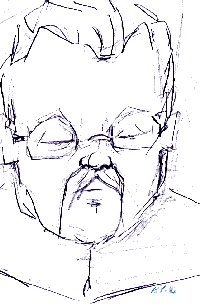
Comm. Ralph Amado
The Nov. 7 trial
session was in
Culver City, but in front of a new
Commissioner, Ralph Amado. Comm. Amado announced that
he (unlike Comm.
Pacheco)
would not grant traffic school after trial and
conviction - unless it
was an
"unusual case."
The session started out with seven defendants, but
four cases were
dismissed
immediately, with no explanation given as to why. One
of the three
remaining
defendants brought up the issue of too little yellow
time, but Comm.
Amado
found him guilty anyway, stating (1),"the duration of
the yellow has no
effect on how the camera operates," and (2) (as Comm.
Pacheco had said
a
number of times), that a California proposition
mandates that evidence
in a
criminal trial (in this case, the photos taken by the
camera) is not to
be
thrown out unless it violates Truth in Evidence.
Comm. Amado did allow another of the three defendants
to go to traffic
school.
It was unclear how hers was an "unusual case."
None of the three defendants raised the VC 210
requirement for a clear
photo -
despite driver's photos that ranged from poor to
terrible. It was also
interesting to note that when Sgt. Omar Corrales
displayed those photos
for
Comm. Amado, he did not zoom in on the faces (the
largest the faces
were
displayed was at about 1/8 of the screen width), and
Comm. Amado, who
was about
15 feet away from the TV, did not ask him the show the
faces in greater
detail.
End of Part 1
Part 2
Part 3
---------------------------------
RED LIGHT
CAMERAS
www.highwayrobbery.net
www.highwayrobbery.net